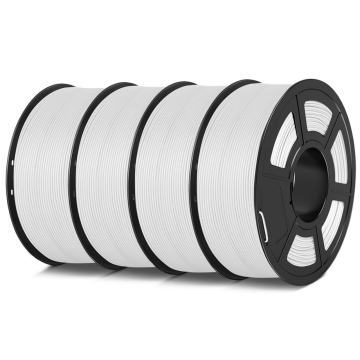
Buying PLA filament in larger quantities can lower the price per kilogram and reduce reordering for makers who use the same material regularly. It can also tie up budget, occupy storage space, and leave unused colors on the shelf when projects change.
For matte pla filament, the decision depends on repeat demand, spool compatibility, color planning, and the amount likely to be used over the next few months.
When Does a Larger Order Make Sense?
Bulk purchasing can suit workflows with recurring material needs. A small print farm producing the same parts, a shop making batches of signage, or a maker repeatedly printing architectural mockups may go through the same color at a predictable rate.
Keeping a reserve available can simplify scheduling and reduce interruptions caused by running out during a project.
A hobbyist moving between unrelated projects faces a different calculation. A wider selection of small spools may provide more flexibility than several kilograms of one shade. Review the colors and weights used in recent projects, then estimate upcoming work before choosing a quantity.
Which Spool Size Fits Your Workflow?
SUNLU‘s PLA Matte range includes spool sizes from 0.25 kg to 5 kg, with different colors and filament diameter options. The examples below show how quantities can align with common printing patterns; they are practical suggestions rather than formal product categories.
| Spool size | Potential application |
| 0.25 kg | Small accents, test pieces, or occasional colors |
| 0.5 kg | Short runs and limited material requirements |
| 1 kg | Routine personal printing |
| 2–3 kg | Frequent use of a recurring color |
| 5 kg | Higher-volume work with compatible spool handling |
Larger spools can reduce how often filament needs to be changed during a long job. Check spool dimensions, printer clearance, holder capacity, and feeding arrangements first. Some setups handle larger rolls easily; others may need an external holder or different placement.
How Can You Compare the Real Cost?
For buyers considering a bulk buy pla filament order, comparing the price per kilogram is more useful than judging by the total checkout price. Divide the product price by its filament weight, then include shipping and any additional equipment needed to handle the spool. A low unit price has less value if a substantial amount remains unused.
For example, a workshop that repeatedly prints the same product may use a large spool steadily, while someone printing once or twice a month may take considerably longer to finish it. The second buyer’s budget may remain tied up in unused stock, even when the listed unit price is lower.
Inventory planning also takes time. Predictable colors and repeat orders make larger purchases easier to manage, while changing designs or seasonal color preferences can shift demand. Estimate consumption from recent jobs and upcoming orders to develop a more realistic purchasing plan.
Why Consider Matte PLA Filament?
A matte finish suits projects where a subdued surface appearance is part of the design, such as architectural mockups, costume details, signage, and coordinated batches of desk accessories. Using the same material and color across a run can support a consistent appearance.
The product information lists a diameter tolerance of ±0.02 mm for the 1.75 mm option. Recommended nozzle temperatures are 205–215°C at 50–100 mm/s and 215–245°C at 100–230 mm/s, with a bed temperature of 50–60°C. These ranges provide setting references; the profile used will still depend on the printer and print conditions.
How Should You Plan Colors and Storage?
Color demand can matter as much as spool weight. A workflow that repeatedly uses black, white, or another standard shade may suit larger quantities. Projects that rotate through many colors may be easier to manage with smaller spools, even when the price per kilogram is higher.
Bulk stock also needs suitable storage. Follow the filament’s storage guidance, keep spools organized by material and color, and make opened rolls easy to identify. A simple inventory note showing spool weight, color, and approximate remaining material can make the next purchase more accurate.
The PLA Matte range provides several spool weights and color options, giving buyers flexibility to match quantities with their recurring projects. Storage space and the equipment needed to handle each spool also affect the practicality of an order.
Which Printing Habits Support a Larger Order?
Regular production and repeat color use generally make larger purchases easier to justify. For occasional hobby printing, the flexibility of smaller spools may be worth more than a lower unit price. The balance also changes with available storage, delivery costs, and whether the selected spool fits the current printer.
Try a straightforward stock plan: track how much filament each recurring project consumes, estimate demand for the next few jobs, and order around that forecast.
When colors or designs change frequently, smaller quantities preserve flexibility. When production remains steady, larger spools can support a more predictable supply of material.
So, is buying in bulk worth it? It depends on the demand pattern. For workflows with steady, repeatable filament use, bulk quantities can lower the unit cost and reduce reordering.
For hobbyists whose colors and projects shift, smaller spools preserve flexibility at a higher unit price. Base the decision on measured consumption over the next few months, not on the headline price per kilogram.
