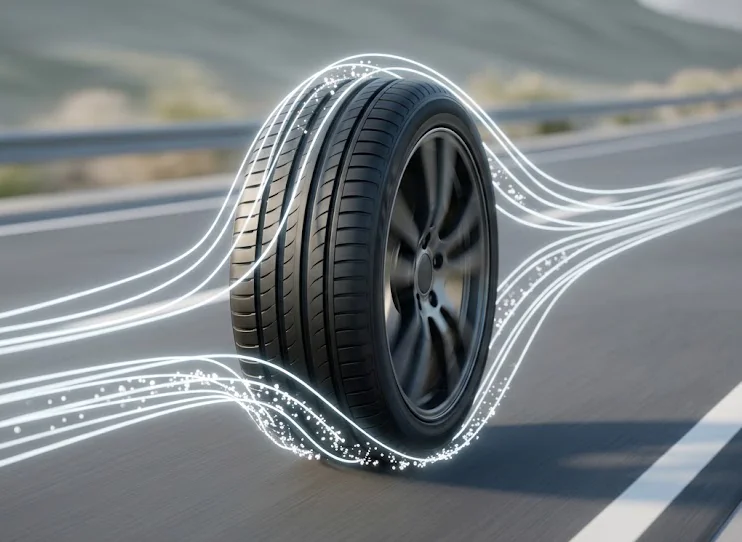
In modern rubber manufacturing, filler technology plays an important role in determining product strength, durability, and processing efficiency. Micropearl silica has attracted attention for its distinctive particle form and ability to disperse throughout rubber compounds.
As tire manufacturers seek to balance wet grip, wear resistance, and low rolling resistance, understanding the structure and working principles of this material becomes increasingly important. White carbon black, another common name for precipitated silica, provides a foundation for this technology, while specialized micropearl grades offer additional advantages in compound processing and performance.
What Is Micropearl Silica?
Micropearl silica is a form of silica engineered into small, bead like particles to support easier handling and dispersion. Unlike conventional silica powders that may form agglomerates during storage or mixing, micropearl grades are designed to distribute more uniformly when incorporated into suitable rubber formulations.
White carbon black is widely used as a reinforcing filler in rubber, tires, and other industrial materials. Despite its name, it is chemically different from conventional carbon black, consisting primarily of silicon dioxide. Both materials can reinforce rubber, but their surface chemistry and interactions with polymers differ.
Micropearl silica combines the reinforcing properties of precipitated silica with a particle structure intended to improve its integration into rubber compounds. Its practical value depends on the grade’s physical characteristics, mixing conditions, and compatibility with the selected polymer system.
The Technology Behind Micropearl Silica
The performance of micropearl silica begins with particle engineering. Manufacturers control characteristics such as particle size distribution, morphology, surface properties, and internal structure to develop silica grades for specific applications.
The micropearl form can help improve material flow and facilitate more consistent feeding during industrial mixing. It may also reduce handling difficulties associated with fine powders, although actual dust levels and flow behavior depend on the product and operating conditions.
Dispersion is another central aspect of the technology. Silica particles can interact with one another through surface forces, creating agglomerates that are difficult to separate during compounding. A well designed micropearl structure can support more efficient distribution, but the final result also depends on mixer design, temperature, mixing time, and the use of suitable coupling agents.
For rubber manufacturers, the objective is to distribute the filler evenly throughout the polymer matrix so that its reinforcing potential can be used effectively.
How Does Micropearl Silica Work in Rubber Compounds?
Micropearl silica reinforces rubber through interactions between its surface and the surrounding polymer system. When appropriately dispersed, the particles help create a reinforcing network that influences the compound’s mechanical and dynamic properties.
In tire tread formulations, this mechanism matters because the rubber must withstand repeated deformation, friction, and contact with different road surfaces. Suitable silica grades can improve wear resistance and support wet grip while helping reduce rolling resistance.
Rolling resistance describes the energy lost as a tire deforms and recovers during rotation. Reducing this loss can improve vehicle energy efficiency. Wet grip, meanwhile, depends on how the tread compound responds to road surfaces under wet conditions. Silica and appropriate silane coupling chemistry can help manufacturers balance these competing requirements.
However, silica does not produce identical results in every formulation. Its surface chemistry, dispersion quality, loading level, and interaction with other ingredients all influence the final compound. Testing remains essential when adjusting a tire formulation.
Why Micropearl Silica Matters for Green Tires
Green tire development focuses on improving energy efficiency without sacrificing durability or driving safety. Traditional tire compounds commonly use carbon black as a reinforcing filler, while silica is increasingly incorporated to help optimize performance.
Micropearl silica can support this development by improving dispersion and facilitating rubber compounding. More uniform filler distribution may contribute to consistent tread properties, while suitable silica and silane combinations can help balance grip, wear resistance, and rolling resistance.
Processing efficiency is another consideration. When a silica grade disperses effectively, manufacturers may achieve the desired compound properties with less intensive mixing. The actual energy savings depend on the formulation, equipment, and production process, so they should be verified through manufacturing trials.
Exploring JSJ Silica’s TIRESIL 165MP
JSJ Silica offers TIRESIL 165MP, a micropearl precipitated silica developed for tire applications. According to its official product information, the grade emphasizes high dispersibility and reinforcement, helping improve tire wear resistance, skid resistance, and grip while reducing rolling resistance.
Its micropearl form is intended to support easier dispersion in rubber compounds and smoother compounding operations. These characteristics make it worth evaluating for manufacturers developing tire tread formulations that require a balance of mechanical strength and dynamic performance.
To determine whether TIRESIL 165MP fits a particular application, formulators should review its technical specifications, evaluate compatibility with the existing rubber system, and conduct comparative testing under their actual processing conditions.
Moving Toward Better Rubber Performance
Micropearl silica combines particle engineering with the reinforcing properties of white carbon black to address practical challenges in rubber processing. Its structure can support improved dispersion, while its interaction with rubber and coupling agents influences the mechanical and dynamic performance of the finished compound.
For tire manufacturers, the key is to select a silica grade that matches the requirements of the application rather than relying on particle form alone. By evaluating dispersion, processing behavior, and finished tire performance together, manufacturers can make more informed material decisions. With specialized products such as JSJ Silica’s TIRESIL 165MP, micropearl silica offers a practical option for exploring improved reinforcement and more balanced tire tread performance.
