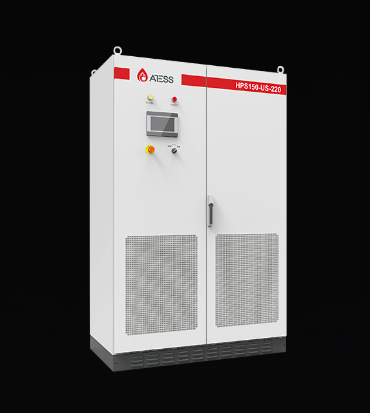
Across commercial and industrial solar projects, proper inverter sizing plays an important role in system stability, energy utilization, and long-term operation. When planning a solar installation, Atess focuses on balancing photovoltaic generation, battery storage, and load demand to help achieve reliable performance. A carefully selected hybrid inverter can support energy management while maintaining compatibility with different project requirements.
Evaluating System Load Requirements
The first step in sizing a solar energy system is understanding the site’s power consumption. Engineers typically review peak load demand, average energy usage, and backup power expectations before determining inverter capacity. A properly matched hybrid inverter should be able to support connected loads while allowing room for future expansion if necessary.
Atess provides solutions ranging from 5kW to 150kW, covering small commercial applications as well as larger commercial and industrial projects. Their integrated systems combine solar and battery functionality in a single unit, helping simplify system design and installation. According to Atess product information, their solutions support battery, load, grid, and solar connections within one platform.
Matching Solar Capacity and Battery Storage
When selecting hybrid inverters for solar, designers also evaluate photovoltaic capacity and battery specifications. The inverter should accommodate the expected solar input while maintaining efficient battery charging and discharging performance. Factors such as available sunlight, installation type, and battery capacity all influence system sizing.
Atess offers multiple product configurations for commercial and industrial applications. Some models include multiple MPPTs, which can increase photovoltaic access opportunities and improve solar generation efficiency. Certain systems also support battery voltage ranges from 600V to 900V, providing flexibility when configuring energy storage solutions.
Considering Operational Functions
System functionality is another key factor when sizing hybrid inverters for solar. Different projects may require backup power, peak shaving, self-consumption, or grid support functions. Selecting equipment that aligns with these operational goals can help maintain consistent system performance.
Atess designs its solutions with programmable working modes and seamless switching capabilities. Several models can achieve grid-to-off-grid switching within 10 milliseconds, supporting applications where power continuity is important. Their product portfolio also covers installations from small commercial systems up to megawatt-scale commercial and industrial projects.
Proper sizing of a solar energy system requires careful consideration of load demand, photovoltaic capacity, battery storage, and operational objectives. By evaluating these factors, project developers can identify a suitable hybrid inverter for their application. With a range of integrated energy storage products and flexible system configurations, Atess provides solutions that support various commercial and industrial solar projects.
