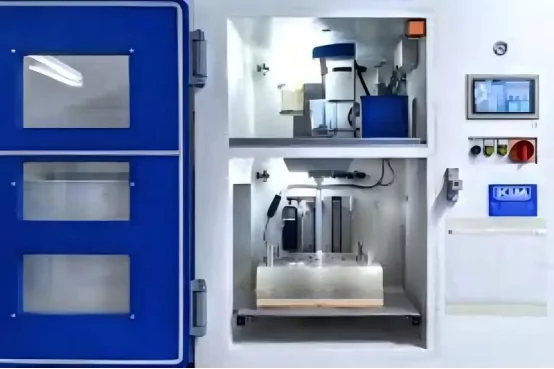
Developing modern clinical equipment requires a sophisticated balance between tight dimensional tolerances, material safety, and structural integrity. Engineering teams frequently face critical decisions when determining whether to carve an intricate component out of a solid block of raw alloy or build it layer by layer from digital data. Sourcing these complex components from an expert medical device prototype manufacturer ensures that physical validation models perform reliably under intense testing environments.
Understanding the Mechanics of Multi Axis Subtractive Cutting
Subtractive computer-controlled fabrication achieves a high level of dimensional precision by systematically removing volume from a solid homogeneous block of material. High-speed rotating cutting tools follow programmed paths to mill, drill, and turn raw stock into finalized components. This direct cutting process works with micro-level accuracy, making it vital for medical parts with tight interfacial tolerances.
Analyzing the Direct Digital Layer Additive Process
Additive manufacturing builds three-dimensional components sequentially, melting and depositing thin layer paths of polymer media from the ground up. This direct software-to-machine workflow removes the friction of building specialized physical fixtures or cutting tools entirely. Geometric complexity does not incur extra runtime penalties, allowing complex internal channels to be generated smoothly.
Designers utilize these printed components to conduct immediate fit checks, route internal electronics, and verify basic packaging spaces. The fast turnaround allows multiple style iterations to be evaluated within a single week, maintaining project momentum. Additive systems excel at producing complex low-weight parts that would be difficult to machine conventionally.
Comparing Setup Timelines and Software Programming Agility
Multi-axis machining requires extensive CAM programming for tool paths, speeds, and fixture setups, including stock clamping and multiple part flips—adding significant lead time before cutting starts.
Additive manufacturing needs little more than CAD slicing and material loading. Design revisions can be sent and printed overnight with no manual intervention, enabling fast iteration and instant validation of changes.
Material Diversity and the Use of Medical Grade Alloys
The healthcare sector operates with an extensive spectrum of raw materials ranging from lightweight aluminum and stainless steel to specialized polymers like PEEK. Subtractive machining works on solid, commercial-grade stock directly, ensuring that specialized material grades retain their full mechanical properties. This material authenticity is essential for components exposed to high heat or abrasive friction.
Additive systems remain constrained by a narrower selection of proprietary printable filaments, powders, or liquid resins. Many common clinical materials, such as specific grades of implantable titanium or transparent polycarbonates, are difficult to print with the exact isotropic structural consistency of a machined solid billet. This restriction can force engineers to accept material compromises during intense functional stress testing.
Evaluating Surface Fidelity and Geometric Tolerances for Sealing
Components emerging from high-speed cutting tools possess exceptional native surface smoothness and crisp geometric definition right out of the machine. This clean baseline ensures that mating surfaces seal tightly against gaskets, preventing fluid leakage in surgical fluidics or enclosure assemblies. The precise dimensions allow moving components to interact smoothly without unwanted mechanical play.
Layered additive fabrication inherently leaves visible stair-stepping lines along the exterior curved boundaries of the printed part. Achieving a smooth, sterile appearance requires secondary operations like manual sanding, polishing, or chemical vapor smoothing. These extra manual steps add processing time and can inadvertently distort critical mating tolerances.
Structural Anisotropy and Resistance to Torsional Stress
Components built via additive layers frequently exhibit anisotropic properties, meaning their structural strength varies depending on the direction of physical force. The microscopic bonds between individual material layers represent potential points of vulnerability under severe shear or tensile load. This structural characteristic can affect the reliability of extreme vibration or structural impact safety testing.
Machined parts handle multi-directional structural load predictably because the material matrix remains completely uniform in all directions. This mechanical integrity gives validation engineers complete confidence during rigorous field performance and physical laboratory simulations. Having access to isotropic parts ensures that testing data matches the performance of mass-produced items.
Mitigating Upfront Capital Risk and Optimizing Budgets
Developing a new medical platform involves significant financial risk, especially when ordering hard factory tooling for unverified component designs. Utilizing direct software-driven fabrication methods avoids these heavy initial costs, keeping project budgets flexible during fluid development stages. Companies can refine part geometries repeatedly without facing severe financial penalties for updates.
Advanced Manufacturing Cycles for Clinical Applications
When navigating the complex compliance demands of clinical engineering, collaborating with a dedicated manufacturing specialist is a major advantage. APT-Mold provides high-precision solutions designed to transition complex medical concepts from initial software profiles to durable, regulatory-ready assets. The advanced workshop implements advanced manufacturing cycles to accelerate fabrication and reduce development costs effectively.
The production setup at APT-Mold integrates advanced CNC machining to deliver precise customization, meeting the rigorous demands of modern medical device prototyping. Operating with extreme accuracy across various engineering plastics and metals, the facility ensures that all finished components fulfill performance goals. This professional framework empowers hardware teams to work with a dependable medical device prototype manufacturer to secure highly precise, sterile-compatible components smoothly.
Conclusion
Deciding whether to deploy computer-controlled subtractive machining or additive printing for medical development requires balancing geometric complexity against material requirements and structural loads. Additive manufacturing remains a highly efficient tool for rapid style exploration, low-weight layouts, and risk-free fit validation where tooling is impractical. As design demands shift toward intensive mechanical validation, tight tolerances, and maximum structural integrity, subtractive CNC milling remains the necessary industrial standard.
