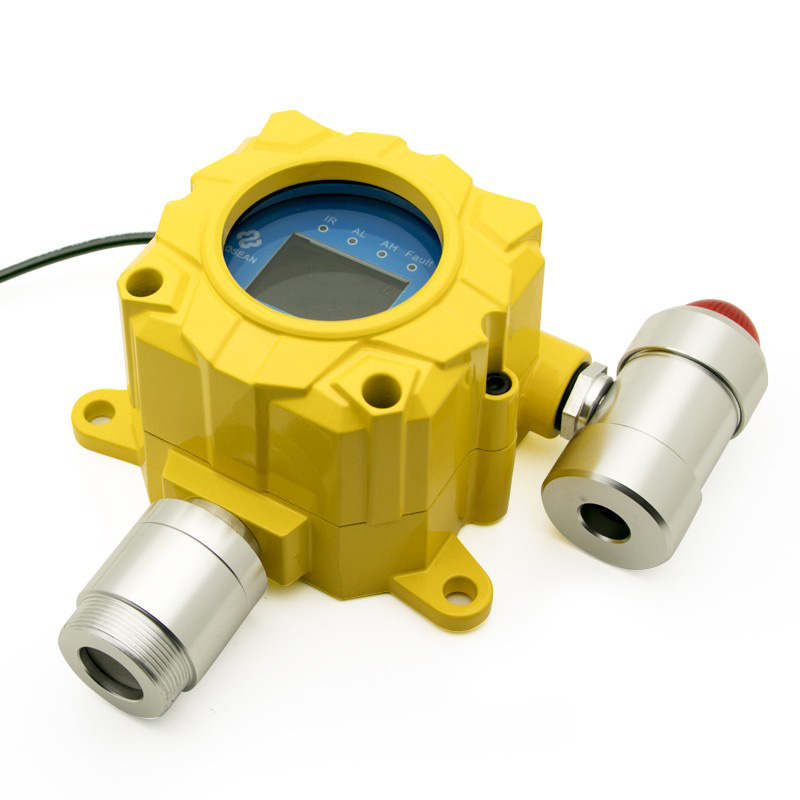
Industrial facilities face different gas risks across work areas, so no single monitoring format suits every task. Portable instruments travel with workers, fixed detectors watch selected points, and area-monitoring systems assess wider zones. The right choice depends on target gases, release points, worker movement, and site layout. Combining these approaches often provides more complete coverage than relying on one industrial gas detector class alone.
- Portable Detectors: Monitoring That Moves with Workers
Portable gas detectors are handheld or wearable instruments for routine work, maintenance, inspections, and confined-space activities. Personal monitors measure air near the worker, while pump-sampling units draw air from remote or difficult-to-reach locations before entry.
Their main advantage is flexibility. A maintenance team can use the same instrument at different tanks, pipelines, process units, or utility rooms. Multi-gas models can monitor several hazards, including oxygen deficiency, combustible gases, carbon monoxide, and hydrogen sulfide. This makes portable equipment valuable when exposure risks change with the task.
Portable devices depend on correct use. Workers must position them appropriately, check batteries, perform bump tests and calibration as instructed, and respond to alarms. They cannot protect an unattended area when nobody is carrying them.
- Fixed Detectors: Continuous Protection at Known Risk Points
Fixed gas detectors are installed where leaks or hazardous accumulation are credible. Typical sites include pump rooms, compressor stations, chemical storage areas, production lines, boiler rooms, and wastewater facilities. Once commissioned, they can monitor continuously and transmit readings to a gas controller, plant control system, or alarm panel.
Fixed monitoring is useful when a release could occur without employees nearby. Placement is critical: gas density, ventilation, obstacles, and likely leak sources influence sensor locations. A poorly positioned unit may provide an incomplete picture.
The Bosean K-G60 illustrates this class. It detects flammable gases or selected toxic and harmful gases, with sensor options for substances such as CO, H₂S, oxygen, methane, and ammonia. It includes 4–20 mA output, RS485 input, DC 24 V power, wall-mounted installation, IP66 protection, and an explosion-protection rating of Ex db IIC T6 Gb / Ex tb IIIC T80 C Db. Its stated response time is under 30 seconds. Buyers should confirm the exact gas configuration and certification for the intended site.
- Area Monitoring: Understanding Conditions Across a Zone
Area monitoring focuses on the atmosphere across a defined work zone rather than only at one person or sensor point. It may use several fixed point detectors connected to a central controller, portable area monitors positioned around a temporary job, or open-path instruments that measure gas along a beam.
This approach is relevant for tank cleaning, shutdown maintenance, turnaround projects, loading areas, and other work where teams move through changing environments. Multiple monitoring points can help identify whether a hazard is localized or spreading. Open-path systems cover longer distances, although readings represent gas concentration along the beam and may not pinpoint a leak.
Plan area coverage around release scenarios, airflow, access and evacuation routes, and alarm audibility. One central monitor may not represent every corner of a large or partitioned space.
- How to Select the Right Monitoring Class
Procurement teams should begin with a hazard assessment covering target gases, possible concentrations, release locations, worker activities, and response time. Then determine whether the priority is personal exposure awareness, continuous equipment surveillance, or broader zone coverage.
Technical compatibility matters as much as format. Compare sensor technology, range, response time, alarm levels, environmental protection, hazardous-area certification, power, signal outputs, and maintenance. Controller integration may matter for fixed installations; portable buyers should consider weight, battery life, readability, alarm strength, and data logging.
A qualified gas detector manufacturer should clarify calibration intervals, sensor replacement, spare-part availability, installation guidance, and technical support. A reliable gas detector manufacturer also explains service expectations before installation. Check specifications against the exact model and sensor configuration, and confirm compliance with local requirements. Each industrial gas detector should be selected for its defined duty.
- Why a Layered Strategy Often Works Best
Portable, fixed, and area monitoring solve related but different problems. Fixed sensors provide continuous oversight at known risk points, portable instruments accompany workers and support pre-entry checks, and area systems assess changing conditions across a work zone. Using them together can close gaps that appear when a facility relies on only one method.
A chemical plant, for example, may install fixed units near storage equipment, issue personal monitors to operators, and deploy temporary area monitors during maintenance. Support the combination with alarm procedures, evacuation plans, training, and functional testing. Detection does not replace ventilation, isolation, permits, or safe work practices.
Building a Gas Monitoring Plan Around Site Risks
Choosing an industrial gas detector means assessing where gas can escape, who may be exposed, how quickly conditions can change, and what action follows an alarm. An experienced gas detector manufacturer can help match sensors and communication options to site requirements.
Bosean supplies gas detection and measurement instruments and provides technical services. The K-G60 offers fixed monitoring at selected points. A gas detector manufacturer should be evaluated not only on equipment range but also on configuration advice and support. Combining all three classes gives operators a practical basis for managing atmospheric hazards.
