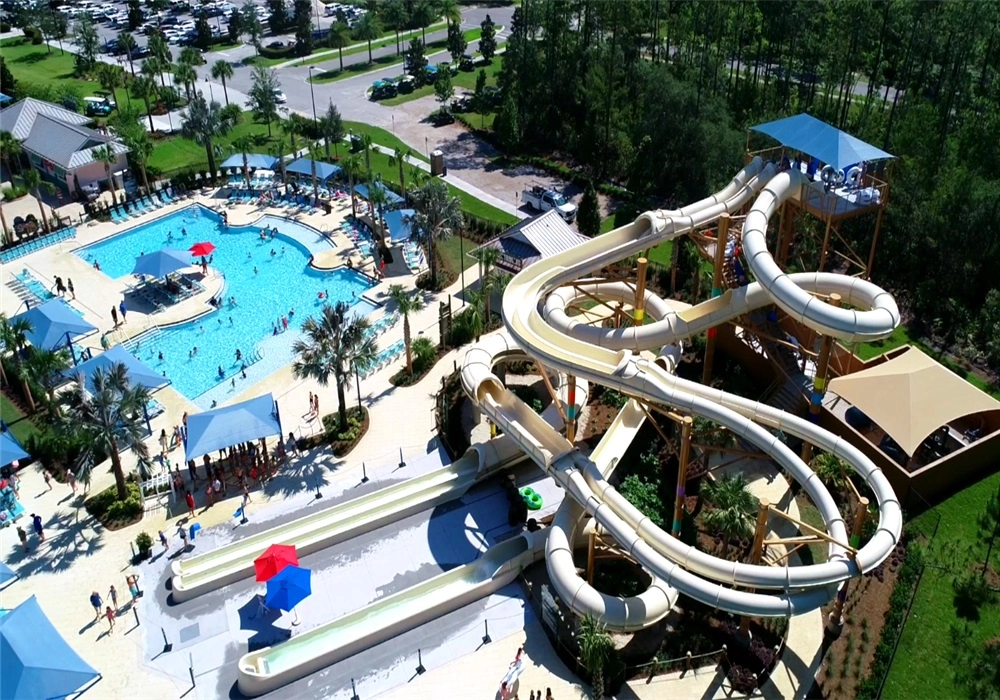
Operators often ask whether a new slide should be open or enclosed, and the honest answer depends on the park. Each format changes how riders feel, how spectators watch, and how much space the structure needs. Jinchao works within this decision, where attraction planning connects physical design with how guests actually behave on site.
Moving Beyond One-Style Slide Design
Ride preferences are rarely uniform across an entire audience. Some visitors enjoy open views and direct interaction with the surrounding environment, while others prefer enclosed passages that create suspense through changes in light and direction. The discussion around body slides vs tube slides is consequently less about which format is universally preferable and more about what experience each configuration contributes to a particular venue.
Enclosed attractions can create a stronger sense of anticipation because riders temporarily lose visual contact with the surrounding park. Well-designed tube water slides can vary darkness, turns, speed, and visual reveals without requiring a large footprint for every section. Their appeal may be especially useful in indoor venues where architectural space and sightlines need to be managed carefully.
Open flumes offer a different relationship with the environment. Body water slides can expose riders to natural or architectural views while making the movement itself easier for spectators to observe. Such visibility can add energy to a pool deck and help families understand an attraction before deciding whether to participate.
Designing Attractions Around Experience
Future attraction planning may focus increasingly on how riders remember a journey rather than on height alone. A Water Slide can create distinct moments through acceleration, directional changes, enclosed sections, open transitions, sound, lighting, and visual reveals. These elements can be combined in different sequences to give each attraction its own identity.
The Twin Racing slide provides a useful example of a competition-oriented format. Its starting height ranges from 12–15 meters, each flume is 0.8 meters wide, and one person rides per lane. With an approximate hourly capacity of 300–400 people, its side-by-side configuration can turn individual riding into a shared experience because participants can compare their progress with others.
Social interaction may become increasingly important as parks seek experiences that work for groups rather than isolated riders. The concept of family water slides can include attractions where relatives share anticipation, watch one another from nearby areas, or discuss the experience afterward. Not every family member needs to ride the same attraction for the attraction to become part of a shared visit.
Match the Format to Your Site
Site conditions often settle the question before guest preferences do. Open body slides need sightlines that let staff observe riders along the flume, and they are exposed to sun and wind, which affects how comfortable the ride is in different climates. Enclosed tube slides keep riders out of the weather and can be easier to place near neighboring structures, but they need a well-planned exit area so guests can leave the landing pool quickly.
Capacity planning differs as well. A flume that allows two riders per lane, a multi-lane racing layout, and a single-rider tube will each produce a different hourly flow, and dispatch rules should be set for the specific configuration rather than copied from another slide. Published figures, such as the Twin Racing slide’s 300–400 people per hour, are best read together with queue space and landing-area size.
Indoor venues add further limits. Ceiling height, structural supports, ventilation, and lighting all influence which slide format fits, and an enclosed tube can sometimes make better use of a restricted footprint. Operators should confirm these requirements with the manufacturer before the layout is fixed so that the structure and the attraction are designed together.
Creating More Flexible Water Parks
Mixed layouts give a park more room to adapt. Placing an open slide and an enclosed slide on one tower, with shared stairs and a shared landing area, lets a venue offer two ride styles without doubling its support infrastructure. Service routes and landing pools should be planned so that either ride can be adjusted later without disturbing the other.
The distinction between body slides vs tube slides may also become less rigid as designers combine open and enclosed sections within the same attraction. A single ride can transition between exposed flumes and enclosed passages, creating multiple sensory conditions without requiring completely separate structures. This approach gives designers more ways to differentiate experiences within a limited site.
Capacity will remain an important consideration, particularly for attractions intended to serve families and large groups. Family water slides can be evaluated through rider combinations, dispatch procedures, queue dimensions, landing areas, and nearby circulation rather than by rider count alone. A balanced attraction portfolio can distribute demand across different experiences and reduce dependence on one popular feature.
Conclusion
The choice between open and enclosed slides is rarely about which format is better. Body slides offer visibility and open-air energy; tube slides offer suspense and weather protection. Matching each format to the site, the climate, and the guest mix lets a park build an attraction portfolio that feels varied even on a limited footprint.
A water park manufacturer such as Jinchao can provide equipment and technical knowledge within that broader development process, but long-term relevance also depends on understanding how guests actually use and remember a facility. Greater flexibility, richer water slide experience, and more varied family water slides can give aquatic destinations room to evolve as recreation habits continue to change.
